
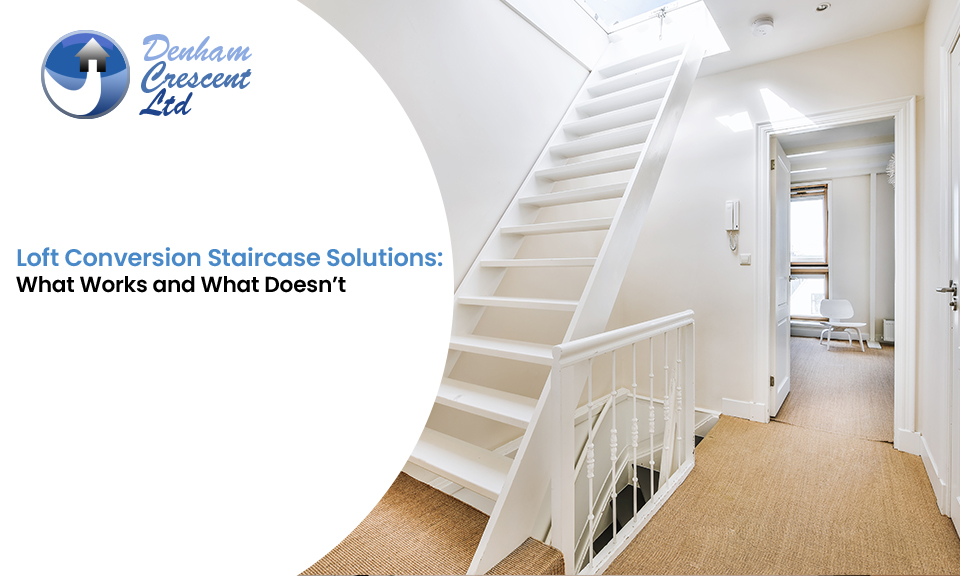
Loft Conversion Staircase Solutions: What Works and What Doesn’t
23, Apr, 2026
Whilst planning a loft conversion, most homeowners focus on the new room. But the biggest design challenge is often the staircase. Where it goes, how much space it takes, and whether it meets regulations. These questions may affect the success of the project.
So choosing the right loft conversion staircase solutions is not just about design. It’s about making sure the loft works properly without disrupting the rest of your home.
How Staircase Design Affects?
The staircase connects your loft to the rest of the house, so its position affects both floors. If it’s not planned properly, it can reduce usable space, create awkward layouts, and even limit how the loft can be used.
Sometimes, the staircase design becomes the deciding factor in whether a loft conversion feels comfortable or cramped. This is why it needs to be considered early.
Where Should Loft Conversion Stairs Go?
The best position for stairs is directly above the existing staircase. It keeps the layout consistent and avoids unnecessary structural changes. It also helps maintain a natural flow between floors.
However, this is not always possible. In some properties, especially older homes, the staircase may need to be placed in a bedroom or along a hallway. This often requires small layout changes downstairs, but when planned properly, it can still feel connected.
Best Loft Conversion Staircase Solutions
Different homes require different approaches. The right solution depends on available space, head height, and layout.
Straight Staircases
A straight staircase is the simplest and most comfortable option. It works best when:
There is enough floor space
Headroom is not restricted
The layout allows direct access
This option is easy to use and meets regulations without complex adjustments.
L-Shaped or Winder Stairs
This is one of the most common loft conversion staircase solutions in UK homes. It is useful when:
Space is limited
The staircase needs to turn
The layout requires flexibility
Winder stairs allow the staircase to fit into tighter areas without taking up too much room.
Space-Saving Stairs
These are designed for smaller lofts where space is restricted. They use:
Steeper angles
Compact treads
Whilst they can help in tight spaces, they are not always suitable for main living areas because they can be less comfortable to use.
Spiral Staircases
Spiral stairs are sometimes considered for very limited spaces. However, they are less common because:
They can be difficult to use daily
They may not meet all building regulations
They don’t suit family homes
They are usually only used in specific situations.
How to Design Stairs in a Small Loft
Small lofts often require more careful planning. The staircase needs to fit without making the rest of the space feel restricted.
This is usually solved by adjusting the layout rather than forcing the staircase into a tight spot. Simply adding a dormer can create the headroom needed for a better use of the staircase. In others, repositioning internal walls or slightly altering the floor below can make a real difference.
The goal here should be to always make the staircase feel like part of the design, not something added later to make the conversion possible.
Read More: Dormer Loft Conversion
UK Building Regulations for Loft Conversion Stairs
Staircases must meet Building Regulations, and these rules often shape the design more than personal preference. The key requirements include:
Around 2m headroom where possible, with some flexibility in loft spaces
A maximum pitch of 42 degrees
Proper handrails and safe access
Fire safety considerations, especially for escape routes
These rules ensure that the staircase is safe, but they can also limit certain design options. This is why early planning is important.
What Happens If There Isn’t Enough Space for Stairs?
This is one of the most common concerns homeowners have. It’s easy to assume that a loft conversion won’t work if space is limited, but there are still solutions.
Instead of forcing a staircase into a tight area, the layout can be redesigned to create space. This might involve adjusting room positions, extending the roof, or improving headroom through structural changes.
What seems like a limitation at first often becomes manageable with the right approach.
How Much Do Loft Staircases Cost in the UK?
The cost of a loft staircase depends on the design and materials used. In most cases, you can expect:
£1,800 to £3,000 for standard staircases
£3,000 to £6,000+ for more customised designs
Costs may increase when structural changes are required or when higher-quality finishes are chosen. Whilst the staircase is only part of the overall project, it plays a key role in how the loft functions.
Common Loft Staircase Mistakes
Many problems come from decisions made too early or without proper planning. Watch out for these common mistakes:
Placing stairs in the wrong position
Not allowing enough headroom
Choosing a design that doesn’t suit daily use
Focusing on appearance instead of practicality
Fixing these issues later can be difficult and expensive.
How Stair Design Affects Your Loft Layout
The staircase is not just a connection between floors. It shapes the entire loft layout. Its position affects how rooms are arranged, how light enters the space, and how comfortable the loft feels.
A well-designed staircase allows the loft to feel like a natural extension of the home rather than a separate or awkward addition.
How Denham Crescent Plans
At Denham Crescent, staircase planning is one of the first things we assess during a loft conversion. We look at the structure of your home, identify the right location, and design the layout around it.
By planning the staircase alongside the overall design, we ensure the loft works properly from the start. This avoids compromises later and results in a space that feels comfortable, functional, and fully integrated with the rest of your home.
Share:
