
5 Smart Extension Ideas for Semi Detached Houses (Costs & Planning Guide)
26, Mar, 2026
If your home feels cramped, dark, or disconnected, you’re not alone. Many semi-detached houses were built with small kitchens, separate rooms, and limited natural light. That layout no longer works for how people live today.
At some point, most homeowners reach the same decision point and think: “Do we move, or do we extend?” Moving is expensive, so the real question becomes: “What type of extension will actually fix my home?”
That’s why many homeowners start looking at extension ideas for semi detached houses that can fix layout issues rather than just add space.
1. Rear Extension
If your kitchen feels cramped and cut off from the rest of the house, a rear extension is usually the first option to consider.
This works best when:
You struggle with cooking and dining in the same space
Your kitchen doesn’t open into the garden
You want a larger, open-plan layout
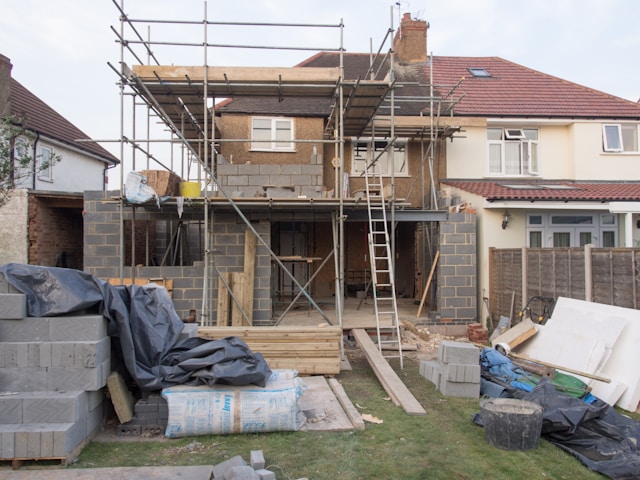
A rear extension gives you space to combine kitchen, dining, and living areas into one continuous layout. It’s one of the most effective ways to change how your home works day to day.
2. Side Extension
If your home feels long but narrow, especially in older semi-detached properties, the issue is often width rather than length.
If this sounds familiar:
Your kitchen feels tight, even though the house is long
There’s unused space along the side of the house
You want more room without extending too far into the garden
A side extension can widen the ground floor and make the layout feel more balanced. It’s a simple change that can make a noticeable difference.
3. Wrap-Around Extension
Sometimes a rear or side extension alone won’t fix the layout. This usually happens when the entire ground floor feels disconnected.
If your space feels:
Broken into small rooms
Difficult to move through
Lacking flow between the kitchen and the living areas
A wrap-around extension allows you to redesign the whole layout. It combines rear and side extensions to create a completely open and functional space.
4. Double-Storey Extension
If your problem isn’t just downstairs space, but also bedrooms upstairs, a single-storey extension may not be enough.
This option works if:
Your family is growing
You need an extra bedroom or bathroom
You want to increase the property value significantly
A double-storey extension adds space on both floors. Whilst it costs more upfront, it often delivers better long-term value because you are increasing total living space.
5. Loft Extension
If garden space is limited or planning restrictions apply, extending outward may not be possible. In that case, the question becomes: “Can we use the space we already have?”
Loft extensions are ideal when:
You need an extra bedroom
You want a home office or guest room
The roof space is currently unused
This allows you to add space without changing the footprint of your house.
How Much Do These Extensions Cost 2026?
Cost is often the biggest concern when choosing between extension ideas for semi-detached houses. In London, typical costs are:
Small extension: £40,000 - £60,000
Medium extension: £60,000 - £90,000
Large extension: £90,000 - £120,000+
Most builds fall between £2,500 and £4,000 per m².
Costs increase depending on:
Structural work
Materials and finishes
Plumbing and electrical changes
Site access
The key is choosing an extension that solves your problem, not just one that fits a budget.
Do You Need Any Planning Permission?
Before deciding on any extension, you need to know what is actually allowed. Some extensions fall under Permitted Development, but this depends on:
Size and height of the extension
Distance from boundaries
Whether your home is in a conservation area
For semi-detached homes, the Party Wall Act is also important because you share a wall with your neighbour. Checking this early avoids delays later.
Common Mistakes That Lead to Wrong Decisions
Many homeowners regret their extension choices because they focused on the wrong things.
Common mistakes include:
Choosing design over function
Underestimating structural changes
Not considering how the layout will feel
Ignoring planning limitations
Trying to manage everything without guidance
An extension should solve a problem, not just look good on paper.
Making the Right Decision for Your Home
Choosing between different extension ideas for semi detached houses is not about picking the biggest or most popular option. It’s about answering one simple question: “What problem am I trying to fix in this house?”
Once that is clear, the right extension becomes much easier to choose. If you’re unsure which extension will work for your home, Denham Crescent helps you make that decision with clarity. From planning advice to construction and finishing, every step is managed clearly so you can move forward with confidence and avoid costly mistakes.
Share:
