
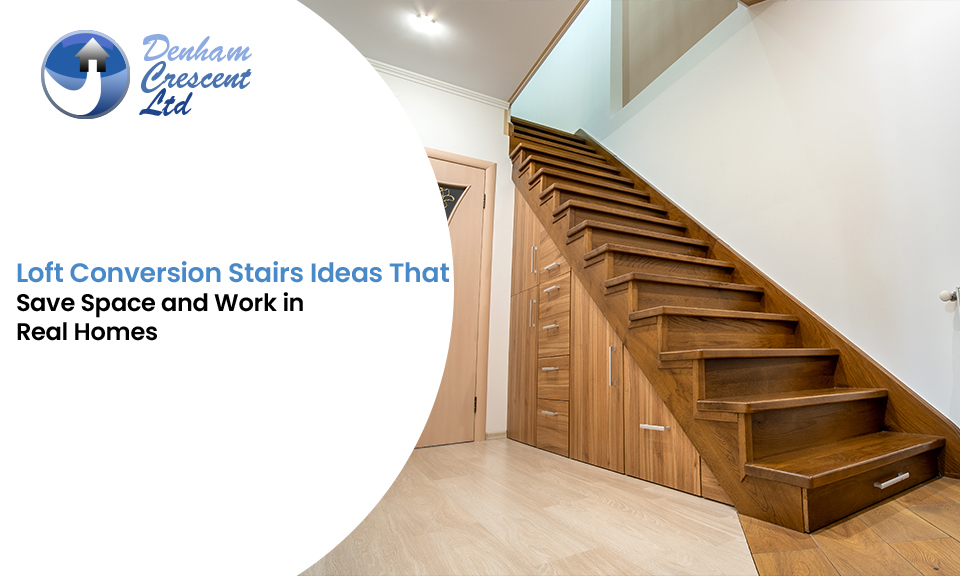
Loft Conversion Stairs Ideas That Save Space and Work in Real Homes
03, Jun, 2026
Being a homeowner, the first thing when planning a loft conversion is to focus on getting that extra room. The staircase becomes an afterthought until they realise it affects almost every part of the project.
If a staircase is poorly positioned can reduce bedroom space, create awkward layouts, and increase construction costs. This is why choosing the right loft conversion stairs ideas is about more than appearance. It is about making the loft work without creating new problems elsewhere in the house.
Can You Fit a Loft Staircase in a Small House?
Most loft conversions are designed around the staircase first. A well-planned staircase for a loft conversion often uses existing landing space and follows the layout of the staircase below.
Small houses, terraced homes, and semi-detached properties can often accommodate loft stairs without major changes when the design is planned properly from the start.
Will a Loft Staircase Reduce Space on the Floor Below?
The answer is usually yes, but the amount of space lost depends entirely on the staircase design and placement.
A poorly planned staircase may reduce bedroom space, create awkward corners, affect furniture layouts, and make hallways feel cramped.
A well-designed loft conversion staircase often sits directly above the existing staircase, allowing the loft to connect naturally with the rest of the home.
Where Should Stairs Go in a Loft Conversion?
The most successful loft conversions position the staircase above the existing stairs, off the main landing, and within existing circulation areas.
When homeowners search for loft staircase ideas, they often focus on the style of staircase. In reality, location is usually more important than the staircase itself.
Which Loft Staircase Design Saves the Most Space?
Different staircase designs suit different properties.
Straight Staircases
Straight staircases are one of the most common solutions because they are simple, practical, and easy to use. They work best when there is sufficient floor length available.
L-Shaped Staircases
L-shaped staircases are popular in UK loft conversions because they use less floor space and fit naturally into many existing layouts. For many homeowners, this is often the best balance between practicality and space efficiency.
Spiral Staircases
Spiral staircases save floor space but are not always suitable for everyday use. They can feel restrictive when moving furniture and may not be ideal for family homes.
Alternating Tread Stairs
These are sometimes used in loft rooms with limited access requirements. However, they are not suitable for most primary living spaces and must comply with Building Regulations.
Loft Staircase Rules You Should Know
Many staircase designs seen online cannot be used without meeting Building Regulations requirements. The most common issues involve:
Minimum headroom requirements
Staircase pitch
Fire safety compliance
Escape routes
For most loft conversions, headroom of around 2 metres is expected over the staircase where practical. Denham Crescent plans it properly with you rather than treating it as a separate part of the project.
When Does a Loft Staircase Require Structural Alterations?
Many loft conversions require structural changes to create a safe staircase opening. This usually involves:
Cutting through existing floor structures
Installing structural steel beams
Strengthening floor joists
Adjusting ceiling layouts below
The level of structural work depends on the size of the staircase opening and the existing structure of the property.
How Much Does a Loft Conversion Staircase Cost?
The cost of a loft conversion staircase design depends on how challenging the project is and the materials chosen. Typical costs may include:
Additional costs may arise if structural alterations, steelwork, or major layout changes are required.
Common Staircase Mistakes That Lead to Poor Loft Layouts
Many loft conversion problems begin with poor staircase decisions. These mistakes include:
Prioritising style over practicality
Reducing headroom unnecessarily
Sacrificing too much bedroom space
Ignoring furniture access
Choosing the wrong staircase position
A staircase should connect the loft naturally to the rest of the home. If it feels awkward to use, the layout often needs further refinement.
Choosing the Right Staircase for Your Loft Conversion
The best loft stairs ideas are rarely the most expensive or visually striking. They are the designs that fit naturally within the property whilst preserving space and meeting Building Regulations.
The right staircase should provide comfortable access, minimise space loss, support the loft layout, comply with regulations, and suit everyday use.
Why Proper Staircase Planning Matters
Many homeowners focus on the loft room itself and only think about the staircase later. In reality, the staircase often determines whether the conversion feels successful once completed.
At Denham Crescent, staircase planning forms part of the wider loft conversion design process. We assess available space, structural requirements, headroom, and room layouts before construction begins.
A well-planned staircase does more than connect two floors. Book a call with our experts to talk about your available loft conversion stairs ideas.
Share:
