
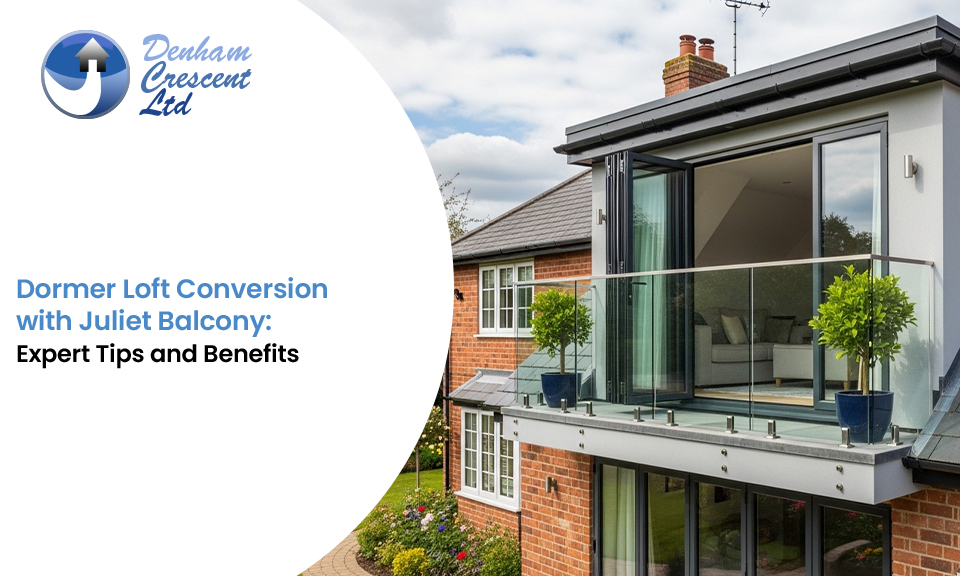
Dormer Loft Conversion with Juliet Balcony: Expert Tips and Benefits
16, Feb, 2026
A loft conversion is often about space, but a dormer loft conversion with Juliet balcony adds something extra like light and airflow.
For many homeowners, it turns a loft bedroom into a space that feels like a proper master suite rather than an attic room. This type of conversion is growing in popularity in London and South London terraces. Read more to know if your home needs this conversion.
What is a dormer loft conversion with Juliet balcony?
A dormer loft conversion is an extension of the existing roof to create vertical walls and usable headroom.
Instead of a small rooflight window, a Juliet balcony replaces part of the wall with large glazed doors and a protective balustrade. Unlike a full balcony, a Juliet balcony has no platform. It sits flush with the building, which means it usually falls under permitted development rules rather than requiring full planning permission.
Who benefits most from this type of conversion?
This conversion works best in terraced and semi-detached houses where the roof height is already suitable for a dormer extension. Many South London properties have lofts with enough ridge height to support a dormer build without lowering ceilings below.
Homeowners who benefit most are those who want:
A master bedroom with strong natural light
A loft space that feels open rather than enclosed
Better ventilation in the upper floors
A modern feature that adds visual appeal
Why choose this over other loft types?
A rooflight-only conversion is cheaper, but it limits headroom and usable floor area. A mansard conversion gives maximum space, but it is more expensive and almost always needs planning permission.
A dormer conversion sits in the middle. It provides good headroom, sensible cost control, and strong resale value. Adding a Juliet balcony improves the quality of the room without pushing costs into mansard territory.
The extra glazing also reduces the need for artificial lighting during the day. That alone can change how the space feels.
Design ideas that work well
The most popular layout is a rear dormer bedroom with central glazed doors and a glass door.
Some homeowners choose twin dormer windows with a central Juliet balcony, whilst others position the balcony slightly to one side to suit internal layouts like wardrobes or en-suite bathrooms.
Glass balustrades maximise views, whilst metal railings add a traditional look. Safety glass and compliant guard heights are required under building regulations, so the aesthetic choice must still meet technical standards.
Cost guide of Dormer Loft Conversion with Juliet Balcony
Costs depend on structure, finishes, and glazing quality. In 2026, the average price of dormer conversion falls between £35,000 and £65,000.
Adding a Juliet balcony usually adds £1,500 to £6,000, depending on door size, balustrade design, and structural work. Larger openings need additional steel support, which increases cost.
Other cost drivers include:
Roof alterations and insulation upgrades
Staircase design and fire compliance
Window and door specification
Scaffolding and site access
Internal finishing level
A 10-15% contingency is sensible for any loft project.
Are there planning and legal checks required?
Most Juliet balconies are permitted development because they do not project outward. However, conservation areas, listed buildings, and Article 4 restrictions can change this.
Building Regulations always apply, even if planning permission is not required. These rules cover:
Fire safety and escape routes
Structural stability
Guard height and glazing safety
Thermal insulation
Ventilation
Party Wall agreements may also be needed if structural work affects shared walls. It’s important to check these points early to prevent delays and redesign costs later.
Turning the idea into a real project
A dormer loft conversion with Juliet balcony combines architecture, engineering, and interior planning. When it’s done properly, it transforms an unused roof space into one of the best rooms in the house.
Denham Crescent works with homeowners across South London to design and build loft conversions that meet regulations whilst delivering strong design value. Every project begins with an assessment of structure, permissions, and layout options.
Get clear advice from our experts.
Share:
