
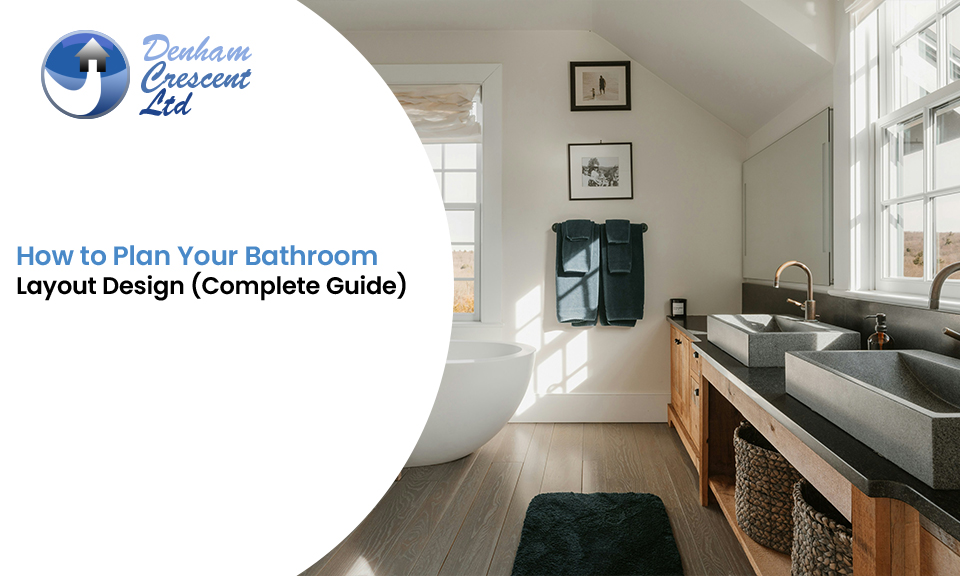
How to Plan Your Bathroom Layout Design (Complete Guide)
28, Mar, 2026
If your bathroom feels awkward or difficult to use, the problem is often not the size but the layout. Many homeowners focus on tiles and fixtures first, but the way everything is arranged has the biggest impact on how the space works every day.
Planning your bathroom layout design properly helps you avoid costly mistakes, improve comfort, and make the most of the space you already have.
A Good Layout vs Bad Layout
A good layout is what makes a bathroom feel easy to use. A poor layout, even in a large space, can feel tight and frustrating.
You might recognise some of these issues:
The toilet feels too close to other fixtures
The door blocks movement
There’s no space to move comfortably
Storage is limited or poorly placed
These problems are usually not about size, but poor planning.
Step 1: Measure Your Bathroom Properly
Before thinking about design ideas, you need accurate measurements. Start by noting:
Wall-to-wall dimensions
Door position and swing direction
Window placement
Existing plumbing points
Many homeowners underestimate this step. Even a small measuring error can lead to a layout that simply doesn’t work once installed.
Step 2: Understand Basic Layout Rules
There are a few simple spacing rules that make a big difference. As a guide:
Allow at least 700mm of space in front of a toilet or basin
A toilet area should be around 700mm wide and 1300mm deep
Showers should be at least 800mm x 800mm for comfort
These are not strict limits, but they help ensure the space feels practical rather than cramped.
Step 3: Decide What Your Bathroom Needs
Before placing anything, think about how the bathroom will be used. Ask yourself:
Do you need a bath, a shower, or both?
Is this a family bathroom or an en-suite?
Do you need extra storage?
Will more than one person use it at the same time?
A clear understanding of your needs helps you avoid adding features that take up space without improving usability.
Step 4: Choose the Right Layout Type
Different layouts suit different spaces. The goal is to create a natural flow rather than forcing everything into the room.
Small Bathroom Layout
Focus on compact fixtures and simple layouts. Wall-mounted units can create more visible floor space.
En-Suite Layout
Prioritise essentials. A walk-in shower, compact basin, and toilet often work best.
Family Bathroom Layout
If space allows, include both a bath and a shower. Storage becomes important here.
Narrow Bathroom Layout
Place fixtures along one wall to keep movement clear and avoid blocking pathways.
What Is the Best Bathroom Layout?
There is no best layout. The right design depends on your space and how you use it.
However, good layouts usually follow the same principles:
Keep movement areas clear
Group similar functions together
Avoid placing fixtures where they block each other
Keep plumbing in practical positions where possible
The goal is to make the bathroom feel simple and easy to use.
Read More: Home remodeling contractors near me
Where Should the Toilet Be Placed?
Toilet placement is often overlooked, but it makes a big difference. Ideally:
It should not be the first thing visible when entering the room
It should be positioned close to the existing drainage
It should allow enough space on both sides
Moving a toilet is possible, but it increases the cost because of plumbing changes.
Common Bathroom Layout Mistakes
Many layout problems come from small decisions that seem harmless at the time.
Common mistakes include:
Placing fixtures too close together
Ignoring door swing space
Choosing oversized fittings
Not planning enough storage
Moving plumbing without considering cost
These mistakes can make even a new bathroom feel uncomfortable.
How Much Does Bathroom Layout Design Cost?
The layout itself doesn’t cost much, but changing it can.
Typical UK costs:
Basic bathroom renovation: £3,500 - £5,000
Mid-range renovation: £5,000 - £8,000
High-end remodel: £8,000 - £15,000+
Costs increase when:
Plumbing needs to be moved
Structural changes are required
New fixtures are added
Keeping the layout close to existing plumbing can help control costs.
Building Regulations You Should Know
Bathroom design must follow certain rules to ensure safety. These include:
Proper ventilation to prevent damp
Electrical safety zones for fittings
Safe plumbing installation
Structural considerations if walls are altered
Ignoring these can cause issues later, especially when selling the property.
How To Plan the Right Layout?
If you’re unsure how to approach your bathroom layout design, Denham Crescent helps you make practical decisions from the start. We assess your space, understand what isn’t working, and guide you towards a layout that improves both function and comfort.
From planning and plumbing considerations to full installation and finishing, every stage is managed clearly so you can move forward with confidence and avoid costly layout mistakes.
Share:
